
Loading…
Naples Capodichino Airport (Aeroporto di Napoli "Vincenzo Capodichino," code NAP) serves southern Italy as the region's primary aviation hub, handling approximately 9.5 million passengers annually. The airport is essential infrastructure for Naples and the Campania region, which has a population exceeding 5.8 million people.
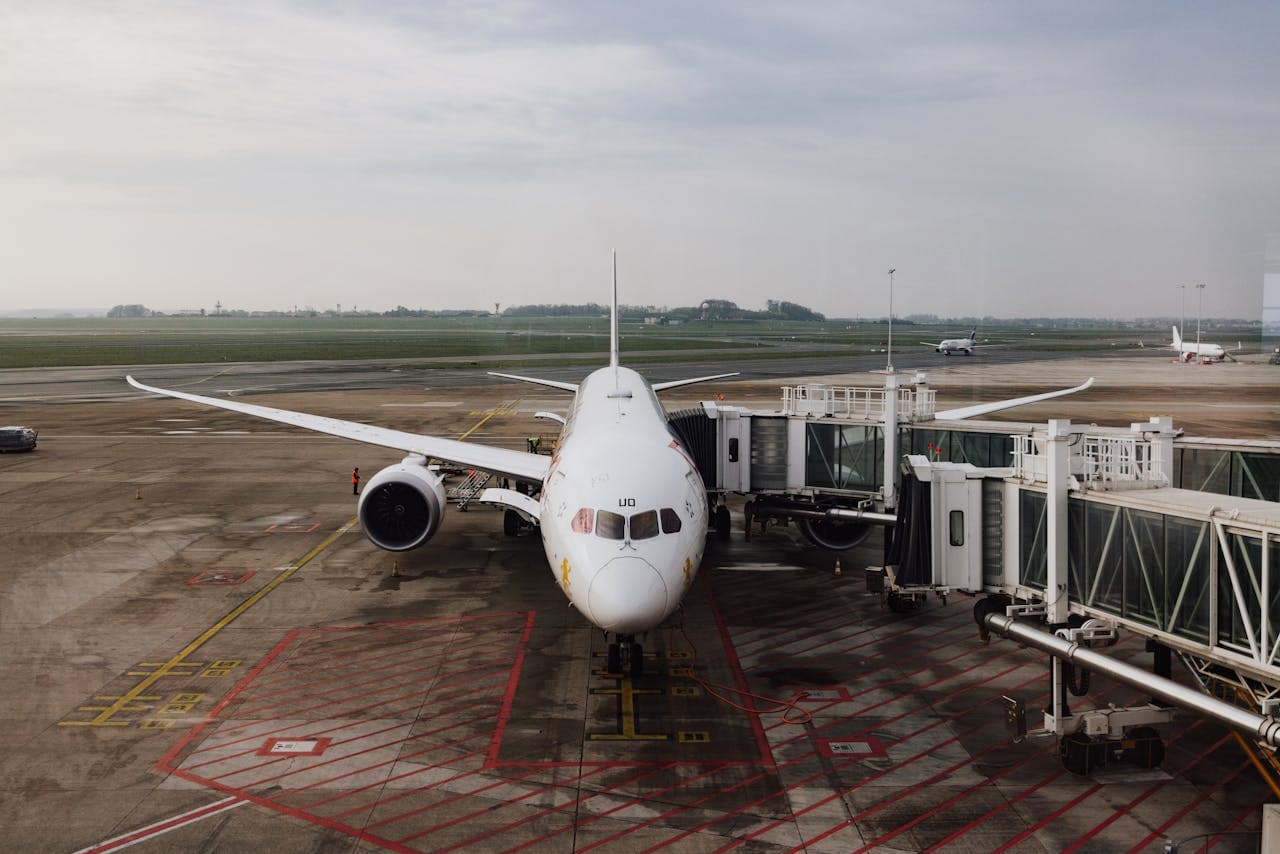
Naples Capodichino Airport (Aeroporto di Napoli "Vincenzo Capodichino," code NAP) serves southern Italy as the region's primary aviation hub, handling approximately 9.5 million passengers annually. The airport is essential infrastructure for Naples and the Campania region, which has a population exceeding 5.8 million people. Unlike northern Italian airports, Naples faces unique geographical and meteorological challenges that significantly impact flight operations and passenger rights.
The airport's strategic position as the gateway to Southern Italy—particularly to the Amalfi Coast, Pompeii, Herculaneum, and the Cilento coast—creates seasonal demand patterns distinctly different from central and northern European routes. Naples serves not only European leisure travelers but also significant emigrant populations traveling to Northern Europe (particularly London, Frankfurt, and Munich), creating distinctive operational pressures and overbooking scenarios.
Naples Capodichino operates with a single main runway of 2,628 meters (8,622 feet)—significantly shorter than major European hubs like Milan Malpensa (4,000m) or Rome Fiumicino (3,900m+). This runway length restricts aircraft operations during adverse weather, high-density flight periods, and with heavier loads.
The short runway creates cascading operational consequences:
When weather or operational issues impact Naples, the short runway becomes an immediate bottleneck. Airlines cannot simply reschedule aircraft—the runway limitation forces genuine operational consequences, making delays more severe and cancellations more likely than at larger airports.
Mount Vesuvius, Europe's most active volcano, sits approximately 25 kilometers from Naples Capodichino Airport. While a catastrophic eruption is unlikely, smaller volcanic events and ash emissions present real operational hazards recognized by European aviation authorities.
Volcanic ash at altitude can:
Historical precedent: The 2010 Eyjafjallajökull eruption in Iceland grounded European aviation for five days. While Vesuvius poses lower eruption risk than Eyjafjallajökull, the operational protocol is identical—any significant ash event triggers comprehensive flight restrictions.
Airlines regularly cite "volcanic ash risk" when denying compensation claims. Italian courts and ENAC recognize this as potentially legitimate extraordinary circumstances, but only if specific ash detection occurred on the flight's scheduled date. Routine invocation without evidence does not suffice.
Southern Italy experiences intense summer convective activity, particularly in July and August. Thunderstorms develop rapidly in the afternoon and evening, creating severe wind shear, hail, lightning, and low-level wind phenomena that disrupt airport operations.
These storms typically last 30-90 minutes but recur multiple times daily during active periods. Airlines operating Naples routes cannot simply delay flights; convective activity may dissipate, then redevelop throughout the afternoon. This creates decision pressure: cancel and rebooking, or hold and risk longer delays.
When summer convective storms cause cancellations, airlines frequently invoke extraordinary circumstances successfully. Italian courts acknowledge that violent thunderstorms constitute genuine operational hazards beyond airline control. However, the airline's failure to provide adequate rebooking options or customer care remains compensable.
Winter brings powerful cold fronts from the Adriatic, creating gusty winds, heavy rain, and occasional freezing precipitation. The short runway becomes particularly problematic in these conditions, with crosswind limits restricting operations.
These winter weather patterns are foreseeable—Naples experiences them annually—so they do not typically qualify as extraordinary circumstances. Airlines' operational decisions regarding scheduling and turnaround buffers become the determining factor.
Ryanair and easyJet collectively operate approximately 58% of Naples' scheduled flights. Both carriers maintain significant Naples bases and use the airport as a secondary hub for Southern Italian and Mediterranean connectivity.
Ryanair's operational model at Naples includes:
easyJet operates complementary routes (Naples → London Gatwick, Luton; Paris CDG; Berlin; Amsterdam) with similarly tight scheduling.
The Naples-London corridor represents one of Europe's highest-volume emigrant routes. Significant populations of Neapolitan and Campanian origin reside in London, creating persistent demand for regular passenger services plus occasional surge demand from family visits, holidays, and return migration.
Ryanair and easyJet systematically overbook the Naples-London route by 8-12% above aircraft capacity, based on historical no-show rates. This practice is legal under EU261, but when oversales materialize, airlines must deny boarding to 3-4 passengers per flight, triggering denied boarding compensation (€400-600).
Similar patterns occur on Naples → Frankfurt and Naples → Munich routes, serving German-origin Neapolitan communities. These routes experience less overbooking than London (5-8% oversales) but still create denied boarding scenarios.
When denied boarding occurs, passengers are entitled to compensation under EU261 regardless of whether the flight subsequently departs on time. The compensation is not dependent on disruption severity; it is a statutory right for involuntary denied boarding.
EU261 compensation depends on flight distance and disruption type:
| Flight Type | Delay 3+ Hours | Cancellation | Denied Boarding |
|---|---|---|---|
| Up to 1,500 km | €250 | €250 + rebooking/refund | €250 |
| 1,500-3,500 km | €400 | €400 + rebooking/refund | €400 |
| Over 3,500 km | €600 | €600 + rebooking/refund | €600 |
Naples routes primarily fall into €250-400 categories:
Longer-haul connections (such as via Rome to North America) trigger €600 compensation.
Denied boarding compensation is triggered when an airline involuntarily prevents a passenger from boarding an overbooked flight. The compensation is not reduced or waived even if the airline:
Denied boarding compensation is statutory and independent of other remedies. A passenger denied boarding on a Naples-London flight receives €400, plus separate entitlement to rebooking/refund if desired.
ENAC (Ente Nazionale Aviazione Civile) is the Italian civil aviation authority responsible for regulating all Italian aviation operations, including compliance with EU261. ENAC maintains regional offices and can intervene in passenger disputes related to flight disruptions at Naples.
ENAC's enforcement authority extends to:
Passengers can file ENAC complaints for Naples-based disruptions through:
ENAC typically requires:
ENAC reviews submissions within 60 days and issues findings. If ENAC determines the airline violated EU261, it can order immediate payment plus administrative penalty fees (separate from the EU261 compensation amount).
Italian law implements EU261 through Codice della Navigazione Article 949-bis, establishing a 2-year prescriptive period (prescrizione biennale) from the scheduled flight departure date. This deadline is fixed and cannot be extended by airline policy, contractual terms, or passenger agreements.
The prescriptive period begins on the scheduled departure date, regardless of:
Example: Flight NAP-LHR scheduled for February 15, 2024, cancelled February 14 at 22:00 (day before scheduled departure). The 2-year deadline is February 15, 2026, not when the cancellation was announced or when the passenger filed claims.
The 2-year clock can be interrupted by:
Critical: Simply contacting airline customer service by phone, email, or chat does not interrupt the prescriptive period. Only formal written claims (certified mail or legal action) count.
If your Naples-based flight was disrupted in March 2024, you have until March 2026 to file compensation claims through any avenue (airline, ENAC, court, arbitration). On March 16, 2026, the airline can legally refuse payment based on statutory expiration.
Many passengers lose compensation rights because they miss the 2-year deadline. Airlines routinely deny claims received after the deadline with the notation "claim is time-barred under Codice della Navigazione Article 949-bis."
Flight FR6523 (Ryanair), Naples to London Stansted, scheduled 16:00 on July 20, cancelled at 14:30 due to severe thunderstorm warning issued by Italian Air Traffic Control. Passenger rebooked on July 22, 2 days later.
Outcome: Likely no EU261 compensation if meteorological evidence shows storm was severe and unforeseeable. However, if airport operations continued and only Ryanair cancelled, the airline's decision to cancel (versus delay) becomes scrutinized. Ryanair's tight scheduling model may be factored against it.
On June 15, ENAC issues a NOTAM indicating increased seismic activity and potential volcanic ash risk near Mount Vesuvius. Ryanair cancels five flights (NAP-LHR, NAP-FRA, NAP-BER, NAP-MUC, NAP-FCO) between 14:00-18:00 on June 16, citing volcanic ash precautions. No actual ash is detected; seismic activity was the triggering concern.
Outcome: Likely upheld as extraordinary circumstances, but ENAC investigates whether Ryanair cancelled proportionately or opportunistically. Cancelling five flights rather than delaying for monitoring might trigger ENAC inquiry into proportionality.
Ryanair flight FR2001, Naples to London Stansted, has 186 passengers booked for a 180-seat aircraft (6-passenger oversale). At gate closure, 4 passengers are asked to deplane involuntarily. They are offered rebooking on the next day's flight (18 hours later) and €15 travel voucher.
Outcome: Each of the 4 passengers is entitled to €400, regardless of rebooking offered. Total liability to airline: €1,600. Ryanair frequently underpays denied boarding compensation (offering only rebooking), relying on passenger ignorance to avoid payment.
A Naples flight experiences a technical issue requiring 90-minute maintenance. During this maintenance, convective storms develop in the area, forcing temporary closure of runway operations (30 minutes). The maintenance is completed, but the queue of waiting aircraft has now grown to 45 minutes of takeoff delays. Original flight time 18:00; actual departure 19:35 (+95 minutes). Arrival at Frankfurt 21:20, scheduled 20:05. Total delay: 75 minutes (under 3-hour threshold).
Outcome: No EU261 compensation under this scenario because 75-minute arrival delay is below 3-hour threshold. However, if airline's maintenance delay alone had caused 3+ hour arrival delay, EU261 would apply.
| Route | Distance (km) | Compensation Tier | Notes |
|---|---|---|---|
| NAP-STN (London Stansted) | 1,545 | €400 | Primary Ryanair hub |
| NAP-LHR (London Heathrow) | 1,665 | €400 | Secondary UK destination |
| NAP-BVA (Beauvais/Paris) | 1,200 | €250 | Budget carrier alternative |
| NAP-CDG (Paris Charles de Gaulle) | 1,380 | €250 | Full-service alternative |
| NAP-FRA (Frankfurt) | 1,230 | €250 | Primary German hub |
| NAP-MUC (Munich) | 1,320 | €250 | Secondary German hub |
| NAP-BER (Berlin) | 1,420 | €250 | Eastern European connection |
| NAP-AMS (Amsterdam) | 1,500 | €250 | Dutch hub (boundary) |
| NAP-VIE (Vienna) | 1,350 | €250 | Central European hub |
| NAP-FCO-ORD (Chicago via Rome) | 8,200+ | €600 | Long-haul classification |
| Challenge | Impact | Frequency | Mitigation Difficulty |
|---|---|---|---|
| Short runway (2,628m) | Aircraft type restrictions; weather-sensitive | Daily | High (infrastructure-based) |
| Summer convective storms | Cancellations; cascading delays | Jun-Aug: 15% of days | High (weather) |
| Winter Adriatic fronts | Crosswind limits; extended delays | Dec-Feb: 8% of days | Medium (forecasting possible) |
| Vesuvius ash risk | Precautionary cancellations; NOTAM alerts | Annually: 1-3 events | Medium (NOTAM protocols) |
| Ryanair high-density scheduling | Tight turnarounds; cascade vulnerability | Daily | Low for airline (revenue model) |
| Emigrant route oversales | Denied boarding incidents; compensation | Ongoing | Low for airline (revenue model) |
| Milestone | Timeline | Jurisdiction | Notes |
|---|---|---|---|
| Flight disruption occurs | Day 0 | ENAC oversight | Delay, cancellation, or denied boarding |
| Passenger claim deadline | 2 years from scheduled departure | Codice Navigazione Art. 949-bis | Prescrizione biennale—non-negotiable |
| Written claim to airline | 30-60 days typical airline response | Airline customer service | Formal letter via raccomandata |
| ENAC complaint | 60-90 days to resolution | ENAC Naples office | Administrative process; interrupts prescription |
| Court filing deadline | Before 2-year expiry | Tribunale di Napoli | Civil court jurisdiction for Naples-based disputes |
| Small claims threshold | €5,000 (EU261 always qualifies) | Giudice di Pace (Justice of Peace) | Fast-track, simplified process |
| Court judgment timeframe | 2-4 years post-filing | Italian civil procedure | Typical civil litigation duration |
A: Precautionary volcanic ash alerts (NOTAMs) issued by ENAC or Eurocontrol have been upheld by Italian courts as legitimate extraordinary circumstances justifying cancellation. However, airlines must demonstrate that the NOTAM was issued by competent authority and that cancellation was proportionate. Simply stating "volcanic ash is possible" does not suffice—there must be an official alert. If ENAC later determines the alert was unjustified, courts may find the airline's cancellation unreasonable and compensable.
A: Generally yes, but with nuance. Violent thunderstorms that occur with little warning or exceed seasonal norms are recognized as extraordinary. However, if an airline can be shown to have had adequate weather forecasting and chose not to delay (instead cancelling to meet schedule), the cancellation decision—rather than the storm itself—may be scrutinized. Also, if the storm lasted only 30 minutes and the airline cancelled without waiting for dissipation, the cancellation may be deemed unnecessary.
A: No. Denied boarding compensation is statutory and independent of rebooking. Under EU261, an airline must pay €400 (for NAP-London) for involuntary denied boarding regardless of whether rebooking is offered. The compensation and rebooking are separate entitlements. Many passengers mistakenly accept only rebooking and lose the €400 right; do not agree to this.
A: You lose your EU261 compensation right entirely. The 2-year deadline (prescrizione biennale) under Italian Codice della Navigazione Article 949-bis is absolute. Airlines will deny claims submitted after this date citing statutory expiration. File your claim well before the 2-year mark through registered mail, ENAC, or court to preserve your right.
A: The short runway itself does not affect your EU261 compensation rights. However, it can explain why delays or cancellations occur. If weather or technical issues force cancellation at Naples (versus at a larger airport), the short runway may be part of the airline's extraordinary circumstances defense. Courts recognize that small airports have inherent operational constraints, but this does not automatically excuse airlines from compensation obligations.
A: ENAC (Administrative): Faster (60-90 days); no legal fees; airline subject to administrative penalties; outcome is not legally binding but strongly influences settlement. Court (Civil): Slower (2-4 years); requires legal representation for complex cases; court judgment is binding; prevailing party may recover legal fees. Choose ENAC for quick resolution of clear-cut cases; choose court for disputed facts or high-value claims where you can afford litigation.
Naples' short runway creates genuine operational constraints: Weather, technical issues, and traffic congestion have outsized impact at NAP due to the 2,628-meter runway limitation, but this does not excuse airlines from compensation when failures are preventable.
Vesuvius volcanic ash is a recognized extraordinary circumstance: NOTAM alerts for ash risk are upheld by Italian courts, but airlines must demonstrate proportionality. Precautionary alerts are legitimate; opportunistic cancellations without specific ash evidence may not be.
Summer convective storms are common but not universally excusing: While violent thunderstorms are extraordinary circumstances, foreseeable seasonal storms and airline decisions to cancel (rather than delay) are scrutinized more closely.
Ryanair and easyJet oversale Naples routes systematically: 5-12% oversales on the NAP-London route create frequent denied boarding scenarios. These passengers have automatic €400 compensation rights independent of rebooking.
The 2-year prescriptive deadline is absolute and non-negotiable: Under Italian law, all EU261 claims must be filed within 2 years of scheduled departure. Missing this deadline results in total loss of compensation rights.
ENAC complaints can accelerate payment and enforce compliance: Filing ENAC complaints creates administrative pressure and can result in compulsory payment orders plus penalties. Consider ENAC for straightforward denial scenarios.
It takes less than 3 minutes to check. No win, no fee.
Was your flight at Lentoasema (JYV) delayed or cancelled? Under EU Regulation 261/2004, you may claim up to €600. 1. Gather documents 2. Free eligibility check
Was your flight at Lentoasema (MHQ) delayed or cancelled? Under EU Regulation 261/2004, you may claim up to €600. 1. Gather documents 2. Free eligibility check

Karpathos Island National Airport (AOK) is one of Greece's most remote and operationally challenging aviation hubs, nestled in the Dodecanese archipelago between Rhodes and Kastellorizo. Serving the windswept island of Karpathos, this small airport handles seasonal international charters, domestic connections, and increasingly unpredictable flight disruptions due to severe weather and limited operational capacity.
SkyDelay has a strong track record of launching flight compensation claims against major airline operators.
SkyDelay provides support for passengers disrupted by overbooked flights, delays and cancellations at airports across Europe.
We're here to help you resolve your flight problems and claim your compensation.