
Loading…
Venice Marco Polo Airport (Aeroporto di Venezia "Marco Polo"), located on the mainland near the lagoon, handles approximately 9 million passengers annually. As one of Italy's busiest airports, VCE serves as a crucial gateway to the Venetian Lagoon and Northeast Italy. The airport operates with significant seasonal variation, with peaks during Carnival (February-March) and the Venice Biennale (June and November).
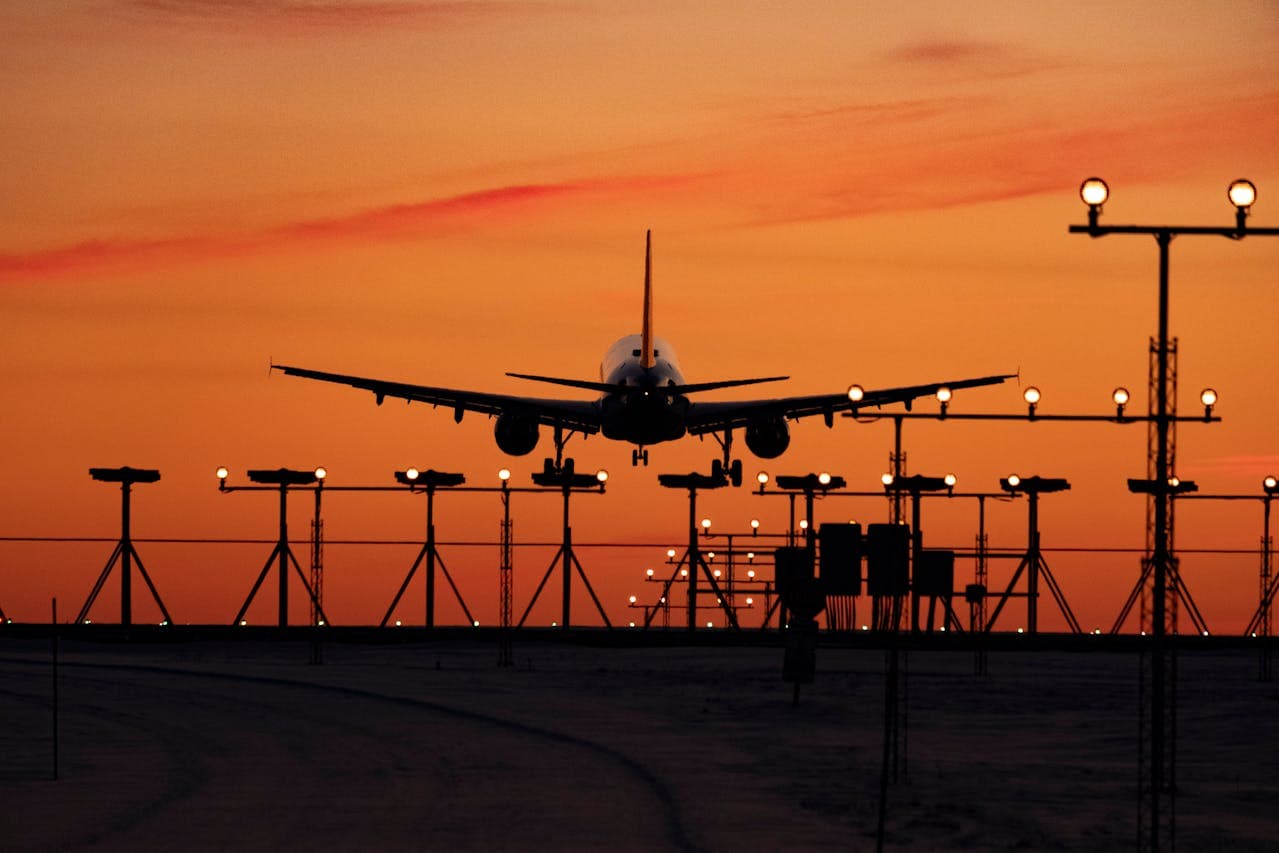
Venice Marco Polo Airport (Aeroporto di Venezia "Marco Polo"), located on the mainland near the lagoon, handles approximately 9 million passengers annually. As one of Italy's busiest airports, VCE serves as a crucial gateway to the Venetian Lagoon and Northeast Italy. The airport operates with significant seasonal variation, with peaks during Carnival (February-March) and the Venice Biennale (June and November).
Venice's unique geography and weather patterns create specific operational challenges. The airport sits adjacent to the Adriatic Sea, making it particularly vulnerable to meteorological phenomena that can disrupt flight operations. Understanding these factors is essential for knowing when airlines bear responsibility for delays and cancellations versus when circumstances qualify as extraordinary.
The Venice lagoon generates considerable fog (nebbia) during autumn and winter months, particularly during early morning and late evening hours. This fog creates visibility conditions that fall below minimums for standard instrument approaches, forcing airlines to divert flights to alternative airports or cancel services entirely. The phenomenon, known locally as "bruma," can reduce visibility to less than 50 meters.
When fog causes delays exceeding 3 hours or cancellations, the critical question becomes whether the airline bears responsibility. EU261/2004 regulations allow airlines to invoke "extraordinary circumstances" as a defense against compensation claims. However, merely foreseeable fog—which occurs regularly during Venice's autumn and winter season—typically does not qualify as extraordinary. Airlines must demonstrate they took all reasonable measures to minimize disruption.
Acqua alta (high water) events pose unique challenges to Venice's airport infrastructure and transport connections. While acqua alta rarely directly affects the airport's runways, it can disrupt the water taxi and vaporetto services essential for passenger transit between the airport and Venice's historic center. This creates a secondary disruption affecting overall travel itineraries.
During severe acqua alta events, passengers may face extended travel times or alternative routing to reach Venice proper. Airlines are not typically responsible for compensation related to lagoon flooding affecting ground transport, but such events constitute force majeure circumstances that can affect airline operations.
The Adriatic coast experiences characteristic early-morning fog that dissipates by late morning. This meteorological pattern particularly affects early departure flights (5:00-8:00 AM), which constitute approximately 23% of VCE's daily operations. The fog typically burns off by 10:00 AM, creating systematic delays for morning flights.
When fog persists beyond normal dissipation times or recurs unexpectedly, it can trigger cascading delays. Airlines operating multiple early flights from Venice must manage ground time carefully to minimize knock-on effects throughout their daily schedule.
easyJet and Ryanair collectively account for approximately 64% of passenger traffic at Venice Marco Polo Airport. easyJet operates year-round services to major European cities including London (Gatwick and Luton), Berlin, Paris, and Amsterdam. Ryanair provides extensive seasonal and year-round routes, particularly to Central European cities and secondary Italian destinations.
These carriers' operational models emphasize tight turnaround times and limited buffer capacity. When disruptions occur, budget airlines often lack the flexibility to quickly reaccommodate passengers, resulting in longer delays and more frequent cancellations compared to full-service carriers.
Air France, Lufthansa, and various regional carriers provide complementary services, particularly during peak season. Wizz Air offers Central and Eastern European connections. These carriers typically maintain higher service standards but operate fewer frequencies, meaning disruptions can leave fewer alternative flight options.
Seasonal chartered services for tourism purposes (particularly during Carnival and Biennale periods) add operational complexity and can contribute to airport congestion and increased delay risks.
Venice's Carnival traditionally occurs in the weeks preceding Ash Wednesday, attracting approximately 3 million visitors to the city. This surge creates unprecedented passenger demand at VCE, with flight frequencies increasing 35-40% above baseline levels. The increased traffic concentrates passenger volumes during peak morning and evening wave times.
During Carnival, Venice's airport approaches operational saturation. Turnaround times compress, maintenance buffers disappear, and any disruption cascades immediately through the daily schedule. Delays originating during Carnival often affect subsequent day operations as aircraft fall out of rotation and staff reach regulatory duty limits.
The Venice Biennale, alternating between art (odd years) and architecture (even years), runs for approximately 5-6 months. The opening weeks of each Biennale generate visitor surges comparable to Carnival, with similar operational consequences. November Biennale closings coincide with autumn's peak fog season, compounding operational challenges.
During these periods, expect 20-30% higher delay rates compared to off-peak seasons, even for legitimate airline disruptions. Weather conditions that might cause 90-minute delays during normal periods can extend to 3+ hours during Biennale peaks due to congestion and reduced flexibility.
EU261 compensation rights depend on flight distance and delay duration:
| Flight Type | 3-Hour Delay | 3+ Hours | Cancellation (Rebooking) |
|---|---|---|---|
| Up to 1,500 km | €250 | €250 | €250 (alternative) |
| 1,500-3,500 km | €400 | €400 | €400 (alternative) |
| Over 3,500 km | €600 | €600 | €600 (alternative) |
| All distances | — | Refund + hotel + meals | Full refund or rebooking |
Venice-to-London flights (approximately 1,300 km) qualify for €250 compensation. Venice-to-Berlin or Vienna flights (1,400-1,500 km) fall in the €250-400 transition zone depending on exact routing. Venice-to-Northern Europe flights typically trigger €400 compensation for delays exceeding 3 hours upon arrival.
Airlines frequently deny compensation claims by invoking extraordinary circumstances. Common arguments at Venice include:
To successfully claim compensation despite airline invocation of extraordinary circumstances, passengers must establish that the airline failed to take reasonable preventive measures. For Venice's characteristic fog, this might include:
Simply asserting that fog occurred does not relieve airlines of compensation obligations if the fog was foreseeable or if operational decisions amplified its impact.
ENAC (Ente Nazionale Aviazione Civile) is Italy's civil aviation authority, equivalent to the FAA or EASA. For flight disruptions at Venice, ENAC oversees compensation claims and can intervene to compel airline compliance with EU261 regulations.
ENAC operates a dedicated consumer complaint process separate from EU261 claims. While EU261 compensation is a passenger right enforceable through courts or alternative dispute resolution, ENAC involvement adds an administrative layer specific to Italian operations.
Passengers can file ENAC complaints through:
Complaints should include flight confirmation, delay documentation, airline response (or lack thereof), and evidence of financial loss. ENAC typically responds within 60 days with guidance on EU261 applicability and recommended next steps.
ENAC can compel airlines to comply with EU261 through administrative measures, including financial penalties (multas) for non-compliance. A single finding of wrongful compensation denial can trigger investigation of the airline's broader practices, potentially leading to systemic compliance orders.
Italian law implements EU261 through Codice della Navigazione (Maritime and Aviation Code) Article 949-bis. This article establishes a 2-year prescriptive period (prescrizione biennale) for claiming EU261 compensation.
The 2-year clock begins from the scheduled flight departure date, not the actual departure or the date of financial loss. For example:
This deadline supersedes contractual terms or airline compensation policies. Even if an airline says "claims must be filed within 1 year," the Italian 2-year law extends the actual deadline.
The prescriptive period can be interrupted by:
Submitting a written compensation demand to the airline via registered mail (raccomandata) interrupts the 2-year period. The airline then has reasonable time to respond, typically 60-90 days. If it denies the claim, passengers retain the remainder of the 2-year window to pursue legal action.
Flight U2614, Venice to London Gatwick, scheduled 10:00 departure, actual arrival 14:30 (+4.5 hours). Airline attributes delay to morning fog at Venice.
Outcome: Passenger likely entitled to €250, despite weather invocation, if evidence shows the delay exceeded typical fog-induced disruptions or the airline's scheduling contributed to cumulative effect.
Flight FR1234, Venice to Munich, March 1 (during Carnival), cancelled 6 hours before departure. Ryanair offers rebooking on March 5, 4 days later. Passenger books alternative flight Munich-Venice same day at €380.
Outcome: Passenger receives €400 EU261 compensation. The €380 alternative flight cost is separate from EU261; additional claims must be justified by showing airline failed to offer suitable rebooking within reasonable time.
Passenger booked Venice → Frankfurt → Berlin (connecting flight). Venice departure on time, Frankfurt connection missed due to 45-minute landing delay at Frankfurt caused by Adriatic fog encountered during flight. Berlin flight departs without passenger.
Outcome: Likely €400 compensation, though airline may argue extraordinary circumstances if Adriatic fog was unexpected.
| Route | Distance (km) | Tier | Delay 3h+ | Cancellation | Notes |
|---|---|---|---|---|---|
| VCE-LHR (London) | 1,290 | €250 | €250 | €250 + alt. | Budget carrier hub |
| VCE-CDG (Paris) | 680 | €250 | €250 | €250 + alt. | Short-haul |
| VCE-FCO (Rome) | 380 | €250 | €250 | €250 + alt. | Domestic equivalent |
| VCE-MUC (Munich) | 1,680 | €400 | €400 | €400 + alt. | Ryanair primary |
| VCE-BER (Berlin) | 1,440 | €250-400 | €250-400 | €250-400 + alt. | Distance boundary |
| VCE-FCO-JFK (New York via Rome) | 6,800+ | €600 | €600 | €600 + alt. | Long-haul classification |
| Season | Fog Frequency | Avg. Delay (min) | Cancellation Rate | Primary Cause |
|---|---|---|---|---|
| Autumn (Sep-Nov) | 18% of days | 25-45 | 2.1% | Adriatic fog, acqua alta |
| Winter (Dec-Feb) | 24% of days | 35-60 | 3.4% | Persistent fog, rare ice |
| Spring (Mar-May) | 8% of days | 12-20 | 0.8% | Occasional storms |
| Summer (Jun-Aug) | 3% of days | 8-15 | 0.4% | Rare fog; occasional convection |
| Milestone | Timeline | Notes |
|---|---|---|
| Flight disruption occurs | Day 0 | Delay, cancellation, or denied boarding |
| Passenger entitled to claim | Within 2 years | Prescrizione biennale under Codice Navigazione Art. 949-bis |
| Airline direct claim | 30-60 days typical | Airline response timeframe (not statutory) |
| ENAC complaint optional | Within 2 years | Administrative channel; interrupts prescription |
| Court filing deadline | Within 2 years | Interrupts prescription; extends right |
| Court judgment timeframe | 2-4 years post-filing | Italian civil procedure; VCE claims heard in Venice courts |
A: No. Foreseeable weather, such as Venice's characteristic autumn and winter fog, does not automatically qualify as extraordinary circumstances. Airlines must demonstrate that they took reasonable preventive measures and that the specific event exceeded normal parameters. If an airline's operational decisions—such as tight turnaround times or insufficient buffer capacity—contributed to delay severity, compensation may still be due. ENAC and Italian courts examine whether the airline made genuine efforts to mitigate weather impacts.
A: Acqua alta (high water) is periodic lagoon flooding in Venice, occurring several times per year, especially in autumn and winter. While acqua alta creates secondary disruptions for passengers traveling between the airport and Venice proper, it rarely directly impacts airport runway operations. Courts typically recognize acqua alta as a foreseeable Italian natural phenomenon. Airlines invoking acqua alta must show specific evidence that airport infrastructure was compromised on the flight's date, not merely that flooding occurred elsewhere in Venice.
A: No. The compensation right under EU261 does not diminish based on passenger volume or seasonal demand. If an airline cancelled your flight due to operational failings rather than extraordinary circumstances, you retain full compensation rights. However, during Carnival, rebooking options are severely limited, potentially extending delays significantly. Courts recognize this hardship but do not increase EU261 compensation amounts; Carnival timing does not change the €250 or €400 entitlement.
A: ENAC (Italy's aviation authority) oversees EU261 compliance and can compel airlines to pay compensation through administrative measures. Filing an ENAC complaint is optional—you can pursue claims directly through courts or private arbitration. ENAC involvement can accelerate resolution if the airline resists, as administrative penalties often incentivize settlement. However, ENAC processes take 60-90 days, whereas private claims can be filed in small claims court much faster. Consider ENAC if the airline denies your claim outright.
A: Under Italian Codice della Navigazione Article 949-bis, EU261 compensation claims must be filed within 2 years of the scheduled flight departure date. This deadline is fixed in Italian law and cannot be shortened by airline policy. If your flight was scheduled for March 15, 2024, you have until March 15, 2026, to submit a claim, regardless of when you actually flew or received a response from the airline. After March 15, 2026, the airline can invoke statutory expiration and refuse to pay.
A: (1) Direct airline contact: Submit written compensation demand via registered mail (raccomandata) to the airline's customer service address, including flight confirmation, delay evidence, and compensation calculation. Request response within 14 days. (2) ENAC complaint: File at protesti@enac.gov.it with supporting documentation. (3) Small claims court: If airline denies claim, file in the court system; Venice courts (Tribunale di Venezia) handle VCE-related aviation disputes. (4) Arbitration: Some airlines offer alternative dispute resolution (ADR) through accredited mediators. Ensure all correspondence is dated and retained for the 2-year prescriptive period.
Venice's fog is common but not universally excusing: Seasonal, foreseeable fog at Venice does not automatically relieve airlines of EU261 compensation duties. Airlines must show reasonable mitigation efforts.
Budget carriers dominate VCE operations: easyJet and Ryanair account for 64% of traffic, often with tight turnaround margins that amplify delay impacts. This history of operational strain may strengthen compensation claims.
Carnival and Biennale periods stress airport capacity: 35-40% passenger surges during these periods compress turnarounds and reduce rebooking options, heightening disruption likelihood and severity.
Prescrizione biennale is a fixed 2-year deadline: Under Italian law, EU261 claims expire exactly 2 years after scheduled departure. Do not delay filing formal claims.
ENAC involvement can accelerate payment: Filing ENAC complaints creates administrative pressure on airlines and interrupts prescriptive periods, reducing expiration risk.
Italian courts recognize extraordinary circumstances narrowly: Foreseeable, recurring phenomena do not excuse compensation; airlines must prove specific, unforeseeable events or genuine force majeure.
It takes less than 3 minutes to check. No win, no fee.
Was your flight at Lentoasema (JYV) delayed or cancelled? Under EU Regulation 261/2004, you may claim up to €600. 1. Gather documents 2. Free eligibility check
Was your flight at Lentoasema (MHQ) delayed or cancelled? Under EU Regulation 261/2004, you may claim up to €600. 1. Gather documents 2. Free eligibility check
Karpathos Island National Airport (AOK) is one of Greece's most remote and operationally challenging aviation hubs, nestled in the Dodecanese archipelago between Rhodes and Kastellorizo. Serving the windswept island of Karpathos, this small airport handles seasonal international charters, domestic connections, and increasingly unpredictable flight disruptions due to severe weather and limited operational capacity.
SkyDelay has a strong track record of launching flight compensation claims against major airline operators.
SkyDelay provides support for passengers disrupted by overbooked flights, delays and cancellations at airports across Europe.
We're here to help you resolve your flight problems and claim your compensation.